Your cat jumps on the counter. You turn around for one second. When you look back, they are sniffing your plate. It happens to every cat owner, and in that split second, a harmless-looking snack can become a medical emergency. The truth is that some of the most ordinary foods in your kitchen are quietly dangerous for your feline friend. This is not about being overly cautious—it is about knowing the real risks so you can act fast when it matters. At The Pet Kingdom, we believe every cat owner deserves clear, honest information about which foods cats cannot eat.
The Science Behind Why Cats React Differently
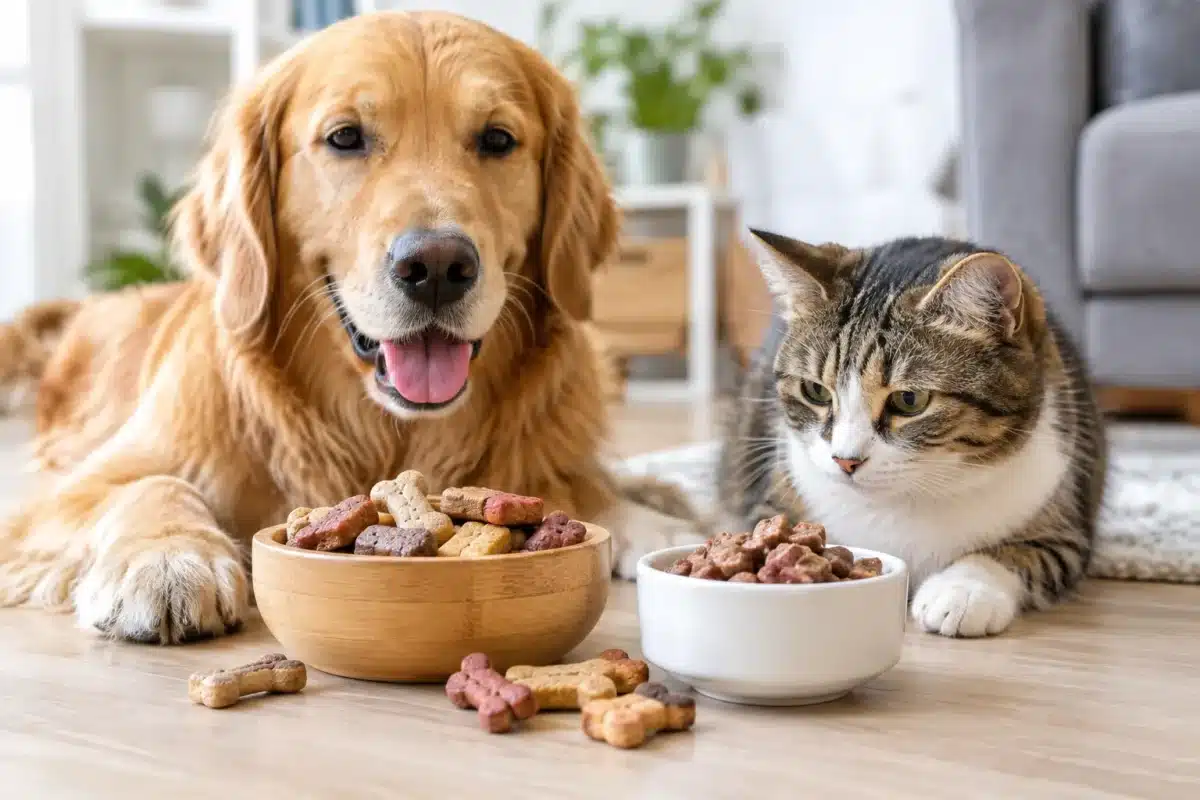
Cats are not small dogs. Their bodies work completely differently, and that difference is exactly what makes certain foods dangerous.
What Makes Cats So Vulnerable:
- Missing Enzymes: Cats lack specific liver enzymes that break down certain toxins, so these substances build up to dangerous levels.
- Tiny Body Weight: A small amount of a toxic food that would barely affect a human can seriously harm a 4 kg cat.
- Carnivore Design: Their digestive systems evolved for meat, not for processing plant compounds, sugars, or artificial additives.
- Red Blood Cell Sensitivity: Certain compounds attack feline red blood cells directly, triggering anemia.
In simple terms: a food that is safe for you can be poison for your cat.
The Dangerous Foods Hiding in Your Kitchen Right Now
Let us walk through the most common culprits, room by room.
Onions and Garlic: The Silent Threat in Every Meal
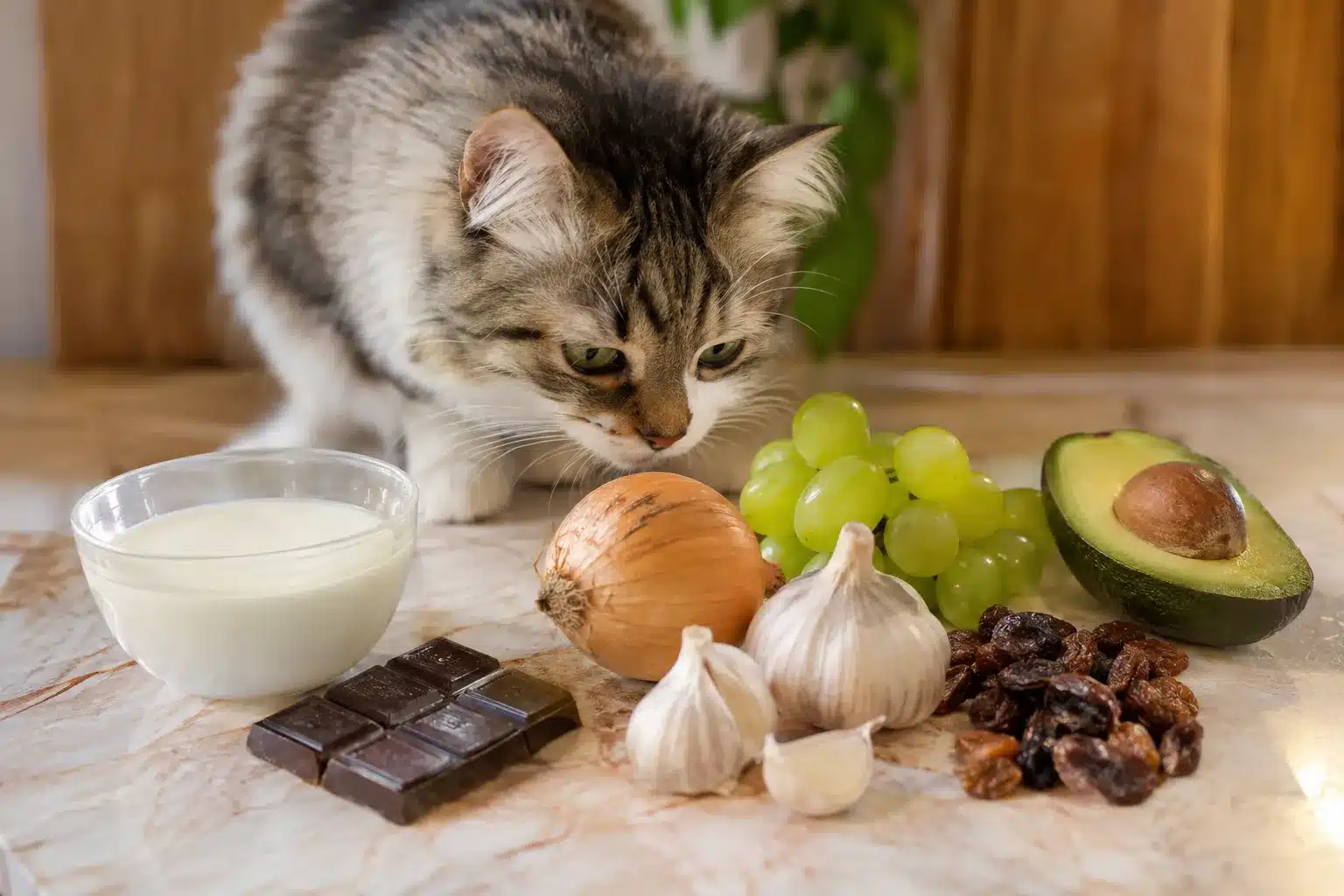
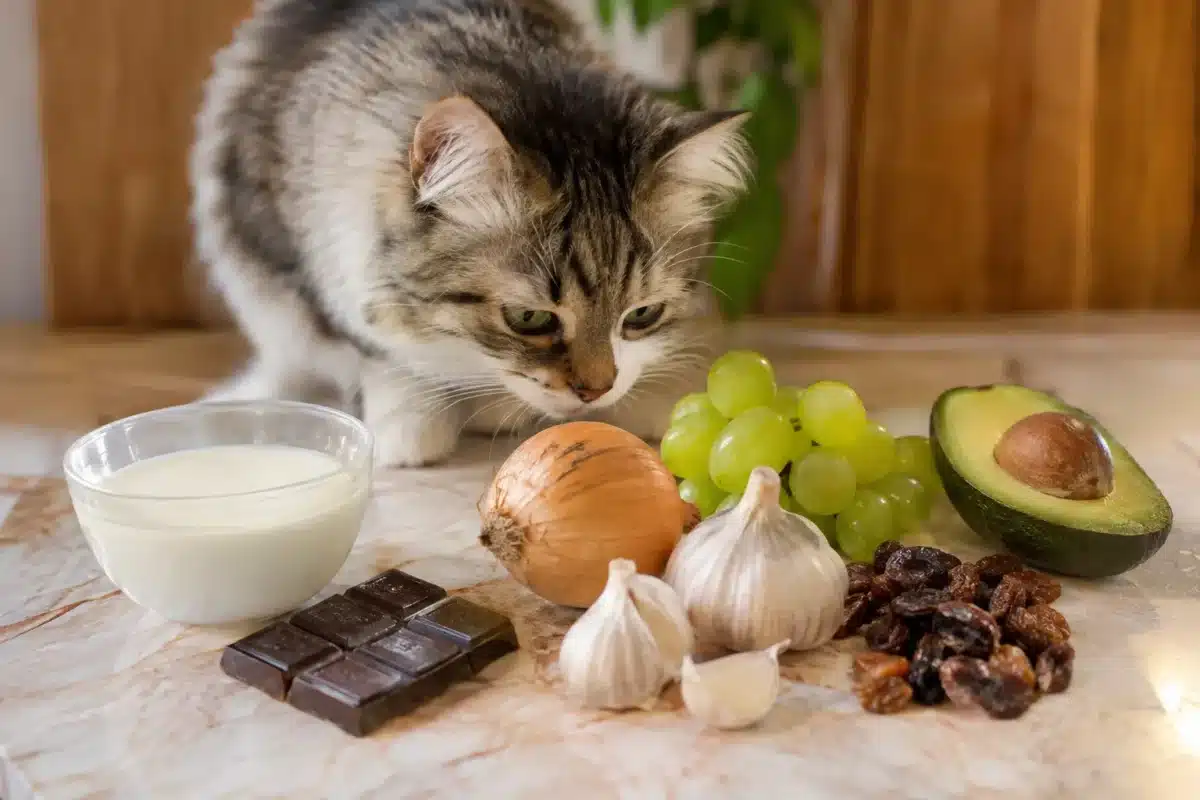
This is the most underestimated danger. Onions and garlic are in almost every cooked dish, sauce, soup, and leftover in your refrigerator.
Why they are so dangerous:
- They contain organosulfoxides, which turn into compounds that destroy red blood cells.
- All forms are toxic: raw, fried, boiled, powdered, and dehydrated.
- The damage is cumulative. Small amounts over several days can cause serious anemia.
What to watch for: Weakness, pale gums, rapid breathing, and dark urine—often appearing days later, which makes the connection hard to spot.
If you suspect your cat ate onion or garlic in any form, call your veterinarian immediately. Do not wait for symptoms.
Chocolate: The Classic Emergency
Chocolate contains theobromine and caffeine, and cats cannot process either one. Dark chocolate and baking chocolate are the worst offenders.
Warning signs: Vomiting, diarrhea, restlessness, fast heart rate, muscle tremors, and in severe cases, seizures.
Grapes and Raisins: Small Food, Big Risk
Even one or two grapes or raisins can trigger sudden kidney failure in some cats. The exact toxic compound is still unidentified, which is why no amount is considered safe.
Alcohol and Caffeine: Hidden in Unexpected Places
Alcohol is not only in drinks. It can appear in yeast dough, certain desserts, and even some medications. Caffeine hides in coffee, tea, energy drinks, and some pain relievers. Both can cause tremors, heart problems, and collapse.
Raw Fish, Raw Meat, and Raw Eggs
Raw foods carry bacteria like Salmonella and E. coli. Raw fish also contains an enzyme that destroys thiamine (vitamin B1), and raw eggs contain avidin, which blocks biotin absorption. Raw diets are not automatically healthier for cats.
Xylitol and Macadamia Nuts
Xylitol, a sweetener in sugar-free gum and some peanut butters, can cause liver failure. Macadamia nuts can trigger tremors and paralysis.
Fruits and Vegetables Your Cat Should Never Touch
Some produce is safe in tiny amounts. These are not.
Unsafe Fruits:
- Grapes and Raisins – kidney failure
- Citrus fruits – digestive upset and nervous system depression
- Cherries – cyanide in pits, stems, and leaves
- Avocado – contains persin, toxic to cats
- Persimmons – seeds can block the intestines
- Figs – digestive upset and skin reactions
Unsafe Vegetables:
- Onions, garlic, chives, leeks – all allium family, all toxic
- Rhubarb – oxalates that damage kidneys
- Tomato leaves and stems – contain solanine
- Raw potatoes – also contain solanine
- Certain mushrooms – some varieties are highly toxic
How to Recognize Food Poisoning Before It Is Too Late
Speed matters. If your cat has eaten something toxic, these signs can appear within hours or take days to show.
Watch For:
- Vomiting and diarrhea
- Excessive drooling
- Sudden lethargy or weakness
- Refusing food
- Abdominal pain or bloating
- Tremors or seizures
- Difficulty breathing
- Pale or yellow gums
- Dark-colored urine
- Collapse or loss of consciousness
If you see any of these, contact your veterinarian or an emergency clinic immediately. Do not wait to “see if it passes.”
What to Do If Your Cat Eats Chocolate
This is the emergency every cat owner fears, so here is exactly what to do.
Step-by-Step Emergency Response:
- Stay calm but act fast. Panic slows you down.
- Identify the chocolate type and amount. Dark and baking chocolate are the most dangerous.
- Call your veterinarian immediately. Do not wait for symptoms.
- Do not induce vomiting unless your vet tells you to.
- Bring the packaging so the vet can calculate the dose.
- Monitor closely for vomiting, tremors, or a racing heart.
Where to Find Safe Cat Food and Treats in Egypt
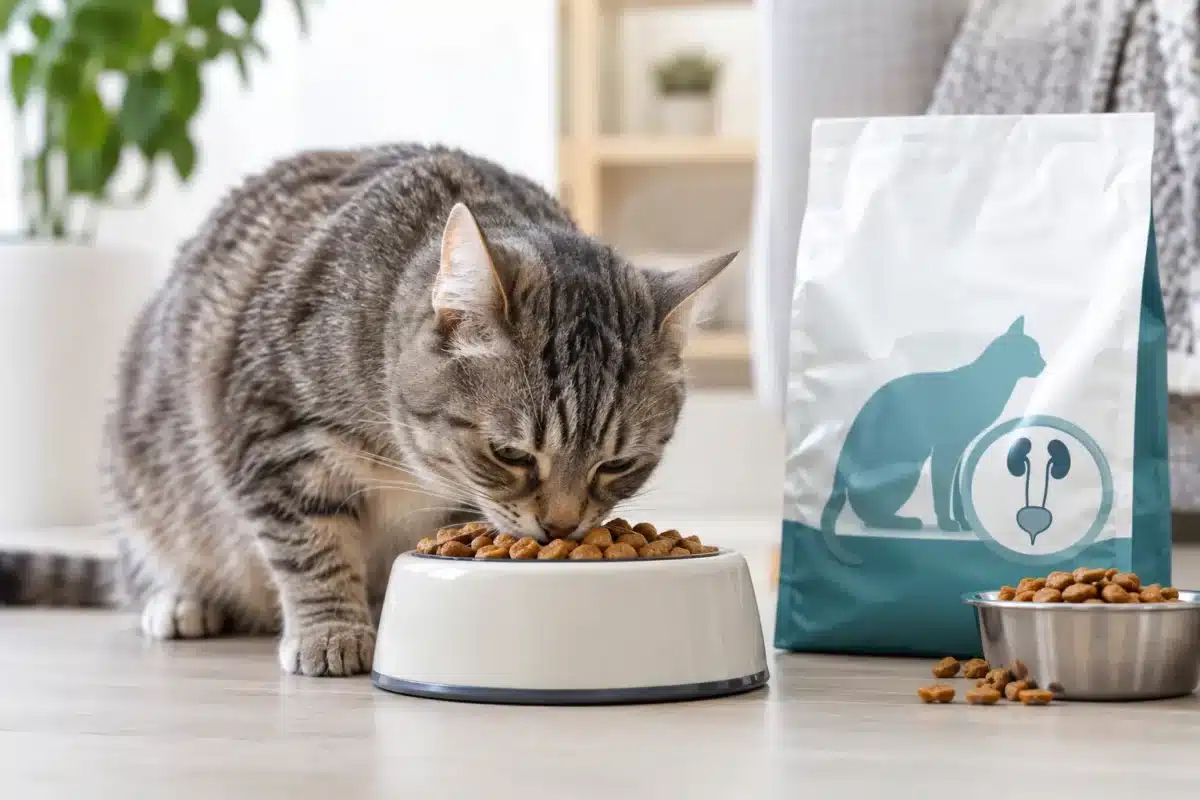
Prevention starts with what you buy. At The Pet Kingdom, we focus on products that are genuinely safe for cats.
What We Look For in Every Product:
- No artificial preservatives like BHA, BHT, or ethoxyquin
- No artificial colors or flavors
- Named protein sources such as chicken, salmon, or turkey first
- No toxic ingredients such as onion or garlic powder
- Limited-ingredient and hypoallergenic treats for cats with sensitivities
Our blog also offers practical guides on cat nutrition, so you always know what is safe to feed and what belongs nowhere near your cat’s bowl.
Final Thoughts: A Few Seconds of Caution Saves Lives
Knowing which foods cats cannot eat is not about fear. It is about awareness. The foods in this article are common, ordinary, and easy to overlook—which is exactly why they cause so many preventable emergencies. Keep them out of reach, learn the warning signs, and act quickly if something goes wrong. Your cat depends on you to know the difference between a treat and a threat.
Visit The Pet Kingdom for safe, high-quality cat food and treats, with fast delivery across Egypt. contact us
FAQs
1. What common human foods are toxic to cats?
The most dangerous foods include chocolate, onions, garlic, grapes, raisins, alcohol, caffeine, xylitol, macadamia nuts, raw fish, raw eggs, and citrus fruits.
2. Why are onions and garlic so dangerous for cats?
They contain compounds that destroy red blood cells, causing hemolytic anemia. All forms—raw, cooked, or powdered—are toxic, and the damage builds up over time.
3. What should I do if my cat eats chocolate?
Call your veterinarian immediately, identify the chocolate type and amount, do not induce vomiting unless instructed, and bring the packaging to help calculate the dose.
4. What are the warning signs of food poisoning in cats?
Watch for vomiting, diarrhea, drooling, lethargy, loss of appetite, tremors, difficulty breathing, pale gums, dark urine, and collapse.
5. Where can I buy cat food free from harmful ingredients in Egypt?
You can buy safe cat food and treats from The Pet Kingdom, which carefully selects products free from artificial preservatives, colors, and toxic ingredients, with fast delivery across Egypt.