

Blog
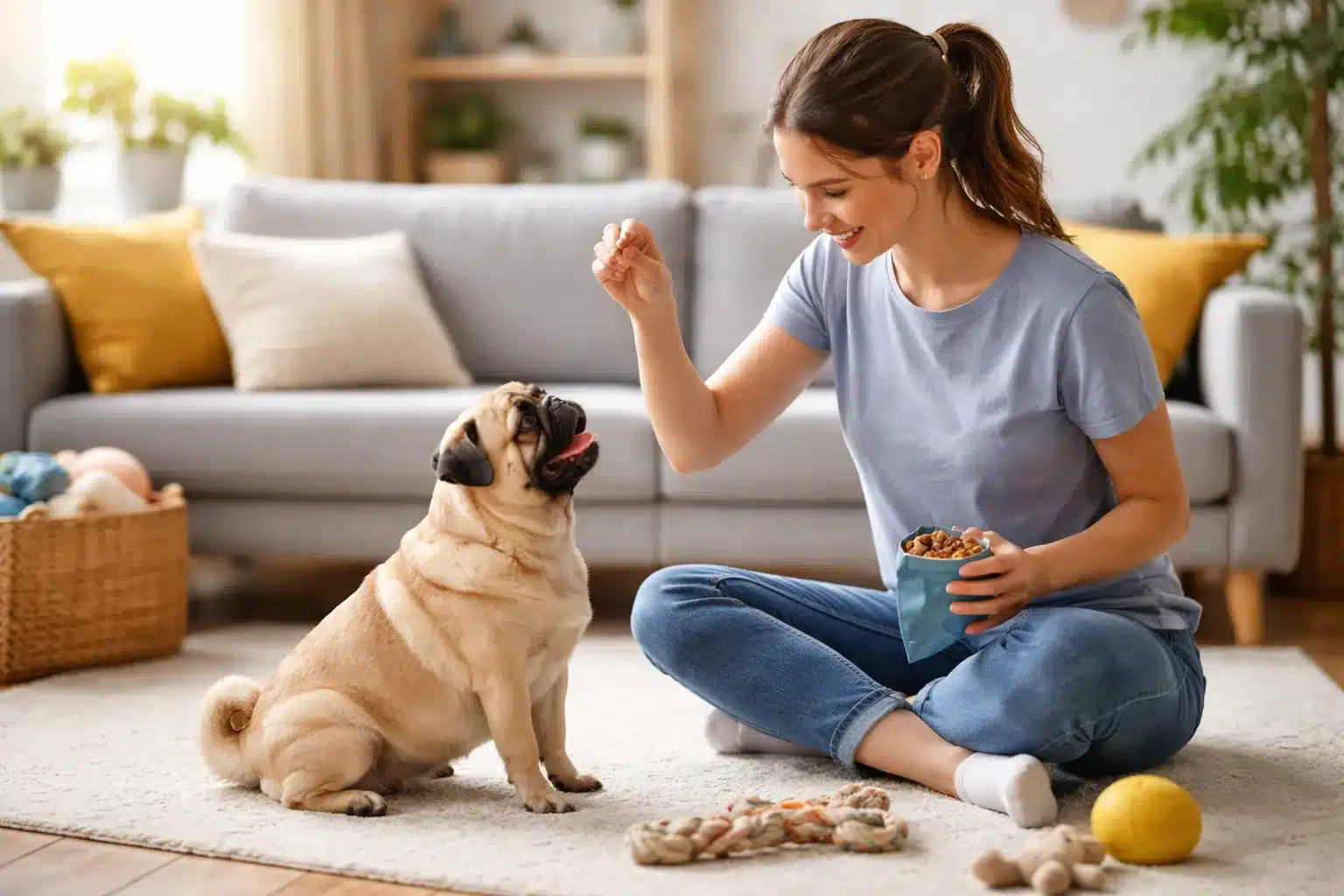
How to train a pug dog at home Easily: 5 Simple Tips

Pugs are one of the most beloved dog breeds worldwide, known for their charming wrinkled faces, playful personalities, and unwavering loyalty. However, their stubborn streak and strong will can make training a challenge for even experienced dog owners. Learning how to train a pug dog at home requires patience, consistency, and a deep understanding of what motivates this unique breed. At The Pet Kingdom, we believe that every pug parent in Egypt can succeed with the right approach. This comprehensive guide will teach you exactly how to train a pug dog at home using positive, effective methods that respect your pug’s personality.
Understanding the Pug Personality: Why Training Requires a Special Approach
Before diving into specific techniques, you need to understand what makes pugs different from other breeds. Pugs were bred to be companions, not working dogs. They are intelligent but easily bored, food-motivated but prone to obesity, and affectionate but stubborn. Mastering how to train a pug dog at home means working with these traits rather than against them. Pugs respond poorly to harsh corrections or repetitive drills. Instead, they thrive on short, fun sessions filled with praise and tasty rewards.
Unlike herding or sporting breeds, pugs were not bred to take direction from humans. They were bred to sit on laps and provide comfort. This means that when you learn how to train a pug dog at home, you must accept that your pug may never achieve the instant obedience of a Border Collie. And that is perfectly fine. The goal is a well-mannered family member, not a competition champion.
Essential Supplies You Will Need Before You Start
Having the right tools makes learning how to train a pug dog at home significantly easier. Here is what every pug owner should have:
- High-value soft treats – Pugs are extremely food-driven. Use small, soft treats that can be consumed quickly. Avoid hard biscuits that take time to chew.
- A well-fitting harness – Pugs have delicate tracheas and protruding eyes. Never use a collar for leash training. A front-clip harness is safest.
- Clicker – Optional but highly effective for marking desired behaviors.
- Training mat or designated area – Helps your pug understand when training mode begins.
- Patience and a sense of humor – Essential for any pug parent.
At The Pet Kingdom, you can find all these supplies in our dog collection, specially selected for Egyptian pet owners.
Step-by-Step Guide: How to Train a Pug Dog at Home
Step 1: Start with Potty Training Immediately
Potty training is usually the first challenge for new pug owners. Understanding how to train a pug dog at home for bathroom habits requires a consistent schedule. Take your pug outside every two hours, immediately after waking, after meals, and before bedtime. Choose a specific spot and use a consistent command like “go potty.” Praise and treat immediately after success. Never punish accidents—clean them with an enzymatic cleaner to remove odors. Crate training can accelerate this process dramatically.
Step 2: Master Basic Commands (Sit, Stay, Come)
Pugs learn best in short, 5-minute sessions. For “sit,” hold a treat above your pug’s nose and move it backward over their head. Their bottom will naturally lower. Say “sit” as they sit, then reward. For “stay,” ask for a sit, say “stay” with an open palm, take one step back, then return and reward. Gradually increase the distance. For “come,” use an excited voice and run backward away from your pug. Reward generously when they reach you. Remember that mastering how to train a pug dog at home means never calling your pug for something unpleasant, like a bath or nail trim.
Step 3: Leash Training Without Pulling
Pugs were not bred for endurance walking, but they still need daily exercise. However, many pugs pull relentlessly on walks. To teach loose-leash walking, stop moving the moment your pug pulls. Wait until the leash slackens, then mark and reward. Use high-value treats to keep your pug’s attention near your leg. Start indoors or in a quiet area before progressing to distracting environments. A front-clip harness gives you better control while protecting your pug’s delicate neck.
Step 4: Address Stubbornness with Motivation
Your pug will test your patience. When they refuse to cooperate, do not repeat commands multiple times. Instead, show the treat, wait for any effort, then reward. Pugs respond poorly to nagging. If your pug walks away, end the session and try again later. Learning how to train a pug dog at home successfully means knowing when to take a break. Frustration only makes your pug less willing to participate.
Step 5: Socialization Is Critical
Pugs are generally friendly, but without proper socialization, they can develop fear-based behaviors. Between 8 and 16 weeks of age, expose your pug to different people, calm dogs, sounds, surfaces, and situations. Keep experiences positive. A well-socialized pug is confident and less likely to bark excessively or show aggression.
Step 6: Manage Common Pug Behavior Problems
- Excessive barking – Pugs bark to communicate. Teach “quiet” by saying the word calmly when they bark, then rewarding silence. Never yell.
- Jumping on people – Turn your back and ignore until all four paws are on the floor, then reward attention.
- Counter surfing – Manage the environment. Keep counters clean and teach “leave it” using high-value distractions.
The Role of Exercise in Training Success
Pugs are brachycephalic (flat-faced), which means they overheat easily and cannot exercise vigorously. Short, frequent walks of 10-15 minutes are ideal, especially during cooler morning or evening hours. Mental stimulation through training games, puzzle toys, and scent work tires a pug out more effectively than long walks. A tired pug is a well-behaved pug. When you focus on how to train a pug dog at home, remember that mental exercise is just as important as physical activity.
Common Mistakes to Avoid When Training Your Pug
Even when you understand how to train a pug dog at home, certain mistakes can undermine your progress:
- Using harsh corrections – Pugs shut down or become anxious when scolded. Positive reinforcement works far better.
- Inconsistent rules – If your pug is allowed on the sofa sometimes but not others, they become confused. Everyone in the household must follow the same rules.
- Overfeeding treats – Pugs gain weight easily. Use tiny pea-sized treats and reduce meal portions accordingly.
- Training when tired or distracted – Train before meals when your pug is hungry and focused.
- Expecting too much too quickly – Pugs learn slowly but retain lessons well once mastered.
How Long Does It Take to Train a Pug?
Most pugs learn basic commands within a few weeks of consistent practice. However, proving those behaviors in distracting environments takes months. Potty training can take anywhere from two weeks to six months, depending on consistency. The key to mastering how to train a pug dog at home is accepting that pugs are not quick learners, but they are willing partners when motivated correctly. Celebrate small victories and maintain realistic expectations.
When to Seek Professional Help
If your pug displays aggressive behaviors like growling over food or biting, consult a professional force-free trainer. Similarly, severe separation anxiety or house soiling despite consistent training may require veterinary evaluation. For routine training supplies and expert advice, trust The Pet Kingdom to support your journey. contact us
FAQs
Pugs can be challenging to potty train due to their stubborn nature, but consistent scheduling, crate training, and immediate rewards for outdoor elimination lead to success within two to six months.
Soft, pea-sized, low-calorie treats work best because pugs are highly food-motivated but prone to obesity; avoid hard biscuits that take time to chew and reduce meal portions accordingly.
Train your pug for five to ten minutes, two to three times daily, always ending before your puppy loses interest or becomes frustrated.
Yes, adult pugs can learn new commands perfectly well using the same positive reinforcement techniques, though you may need higher-value treats and more patience than with a puppy.
Your pug may be distracted, tired, or bored; shorten sessions, increase treat value, train before meals when hungry, and eliminate environmental distractions like other pets or loud noises. 1. Are pugs easy to potty train when learning how to train a pug dog at home?
2. What type of treats work best for training a pug at home?
3. How many minutes per day should I spend training my pug puppy?
4. Can an adult pug learn new commands using home training methods?
5. Why does my pug ignore me during training sessions at home?


