
Blog
How to Groom a Cat at Home: A Step-by-Step Guide

Grooming your cat is an essential part of responsible pet ownership, yet many cat owners feel intimidated by the process. The truth is, learning how to groom a cat at home is easier than you think. Regular grooming not only keeps your cat’s coat shiny and mat-free but also strengthens the bond between you and your feline friend. At The Pet Kingdom, we believe that every cat parent in Egypt can master how to groom a cat at home with the right tools, techniques, and a little patience. This guide will walk you through everything you need to know.
Why Grooming Matters More Than You Think
Many cat owners assume that cats groom themselves perfectly well. While it’s true that cats are fastidious self-groomers, they still need human help. Understanding how to groom a cat at home properly helps prevent hairballs, reduce shedding around your house, allow you to check for skin issues or parasites, and minimize matting, especially in long-haired breeds. Regular grooming sessions also familiarize your cat with being handled, making vet visits and nail trims much less stressful for both of you.
Essential Tools You Need Before You Start
Before learning how to groom a cat at home, gather the right supplies. Using proper tools makes the experience comfortable and safe for your cat. Here is what every cat owner needs:
- Slicker brushes are excellent tools for removing loose fur and preventing mats from forming.
- Metal comb – Perfect for detangling and checking for fleas
- Deshedding tool – Reduces shedding by up to 90% during peak seasons
- Cat-safe nail clippers – Never use human nail clippers
- Cat shampoo – Only use formulas designed for feline skin pH
- Microfiber towels – Absorbent and gentle on fur
- Grooming gloves – Excellent for cats who dislike traditional brushes
At The Pet Kingdom, you can find all these tools in our grooming collection, specially selected for Egyptian cat owners.
Step-by-Step Guide to Grooming Your Cat at Home
Step 1: Choose the Right Time and Place
Pick a quiet time when your cat is relaxed, such as after a meal or a play session. Avoid grooming when your cat is energetic or aggressive. Choose a non-slip surface like a carpeted floor or a table with a towel.
Step 2: Start with Gentle Brushing
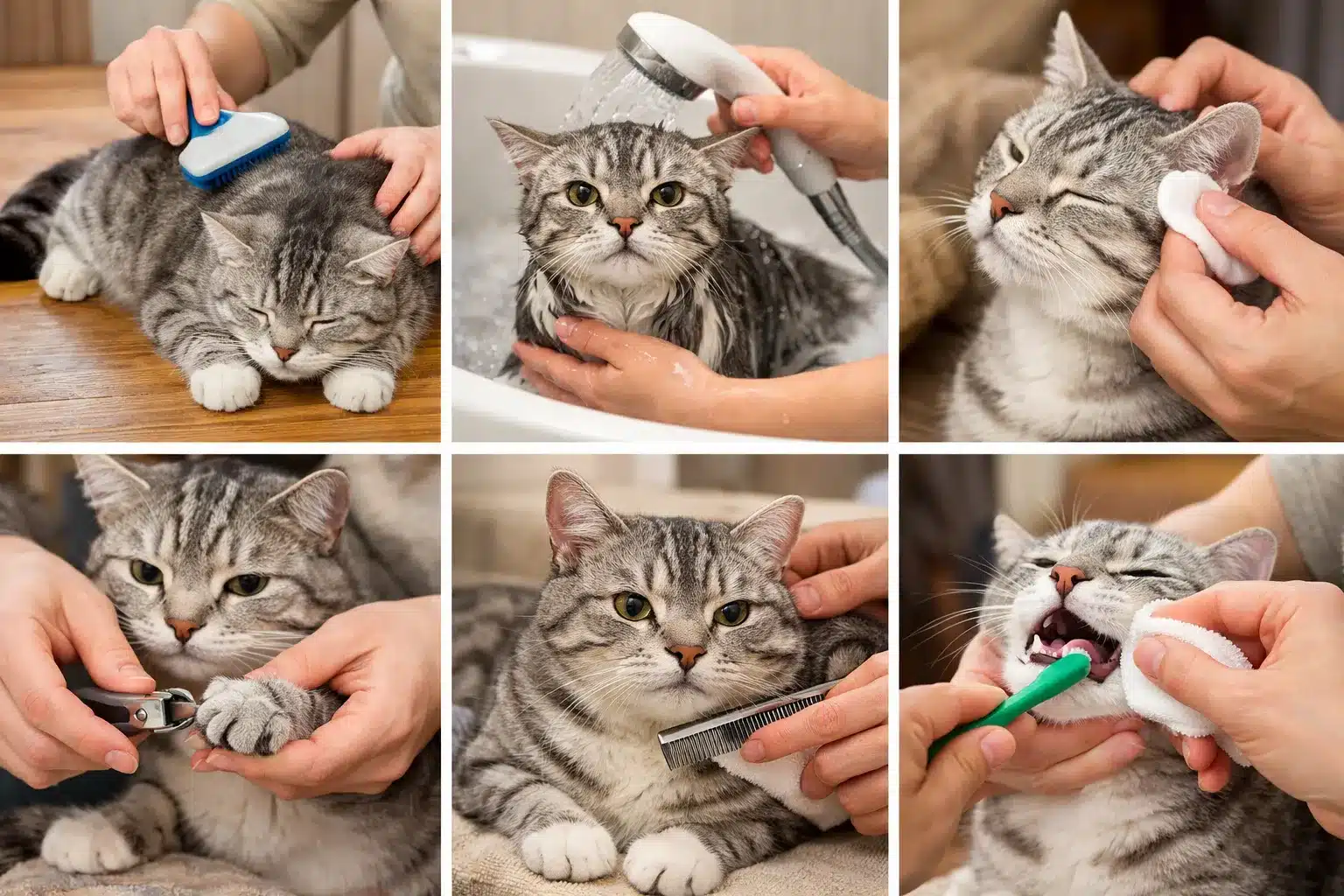
Begin by petting your cat with your hand, then switch to a grooming glove or soft brush. Brush in the direction of hair growth, starting from the head and moving toward the tail. Pay special attention to the belly, armpits, and behind the ears—these areas may quickly. Learning how to groom a cat at home successfully means keeping sessions short: 5 to 10 minutes maximum.
Step 3: Tackle Mats Carefully
If you encounter a mat, never pull or cut it with scissors. You risk cutting your cat’s skin. Instead, use a mat splitter or gently work the mat apart with your fingers. For particularly severe mats, it’s best to consult a professional groomer to avoid causing discomfort or harm to your pet.
Step 4: Trim Nails Safely
When trimming nails, gently hold your cat’s paw and press on the pad to extend the claw. Cut only the white tip of the nail, being cautious not to go near the pink quick to prevent injury. If you’re unsure or nervous, start slow by trimming just one or two nails in each session to help your cat (and yourself) get comfortable with the process.
Step 5: Bathing (Only When Necessary)
Most cats do not need regular baths. However, if your cat is dirty or has a skin condition, bathing is part of how to groom a cat at home. Use lukewarm water, place a rubber mat in the tub for traction, and speak softly. Never pour water directly on the face—use a damp cloth instead.
Step 6: Clean Ears and Eyes
Use a vet-approved ear cleaner on a cotton ball to wipe the outer ear. Avoid inserting anything into your cat’s ear canal at any time to prevent damage or irritation. For the eyes, use a separate damp cotton ball to wipe away corner discharge.
Common Mistakes to Avoid
Even when you understand how to groom a cat at home, mistakes happen. Avoid these common errors:
- Grooming when your cat is stressed – This creates negative associations
- Using human shampoo – It dries out feline skin and causes irritation
- Forcing a session – If your cat walks away, let them. Try again later
- Neglecting the back of the hind legs – This area mats quickly in long-haired cats
How Often Should You Groom?
The frequency depends on your cat’s coat length. Short-haired cats benefit from brushing once weekly. Long-haired breeds like Persians need grooming every other day. During shedding seasons (spring and fall), increase sessions. Nail trims should happen every 10 to 14 days, regardless of coat type. Following a consistent schedule makes how to groom a cat at home a predictable, low-stress event.
Making Grooming a Positive Experience
Make grooming an enjoyable bonding experience rather than treating it like a task or obligation. Use high-value treats before, during, and after each session. Speak in a calm, happy voice. End each session before your cat shows signs of frustration. Over time, your cat may even start purring when they see the brush. At The Pet Kingdom, we recommend starting grooming routines when cats are kittens, but adult cats can learn too, with patience and positive reinforcement.
When to Call a Professional
While mastering how to groom a cat at home handles most needs, some situations require a professional: severe matting close to the skin, aggressive behavior that risks injury, or medical conditions like arthritis that make handling painful. For routine supplies and expert advice, trust The Pet Kingdom to support your home grooming journey. Contact us
FAQs
Brush your short-haired cat once weekly using a soft bristle brush or grooming glove to remove loose fur and distribute natural oils.
No, never use human shampoo on cats because it disrupts their skin pH balance; always use a cat-specific shampoo from a pet supply store.
Start with very short 2-minute sessions using a grooming glove instead of a brush, and offer high-value treats immediately after each session.
Never cut mats with scissors; instead, gently work them apart with your fingers or use a mat splitter tool designed for cat fur.
Yes, nail trimming every 10 to 14 days prevents overgrowth, reduces scratching damage to furniture, and protects both you and your cat from accidental injuries. 1. How frequently should you brush your short-haired cat at home while developing a grooming routine?
2. Can I use my own shampoo to bathe my cat while grooming at home?
3. What should I do if my cat hates being brushed during home grooming sessions?
4. How do I safely remove mats when I groom my cat at home without hurting them?
5. Is it necessary to trim my cat’s nails as part of home grooming?


